One old poem captures what we believe. It shaped our crest, our calling, and the bridge we set out to build for others.
More than a hundred years ago, Will Allen Dromgoole wrote a few short lines that have guided this Foundation from the start. We have carried that spirit into our own words. The whole idea of who we are lives inside it: you make it across the hard places, and then you stop, and you build, so the next traveler can cross too.
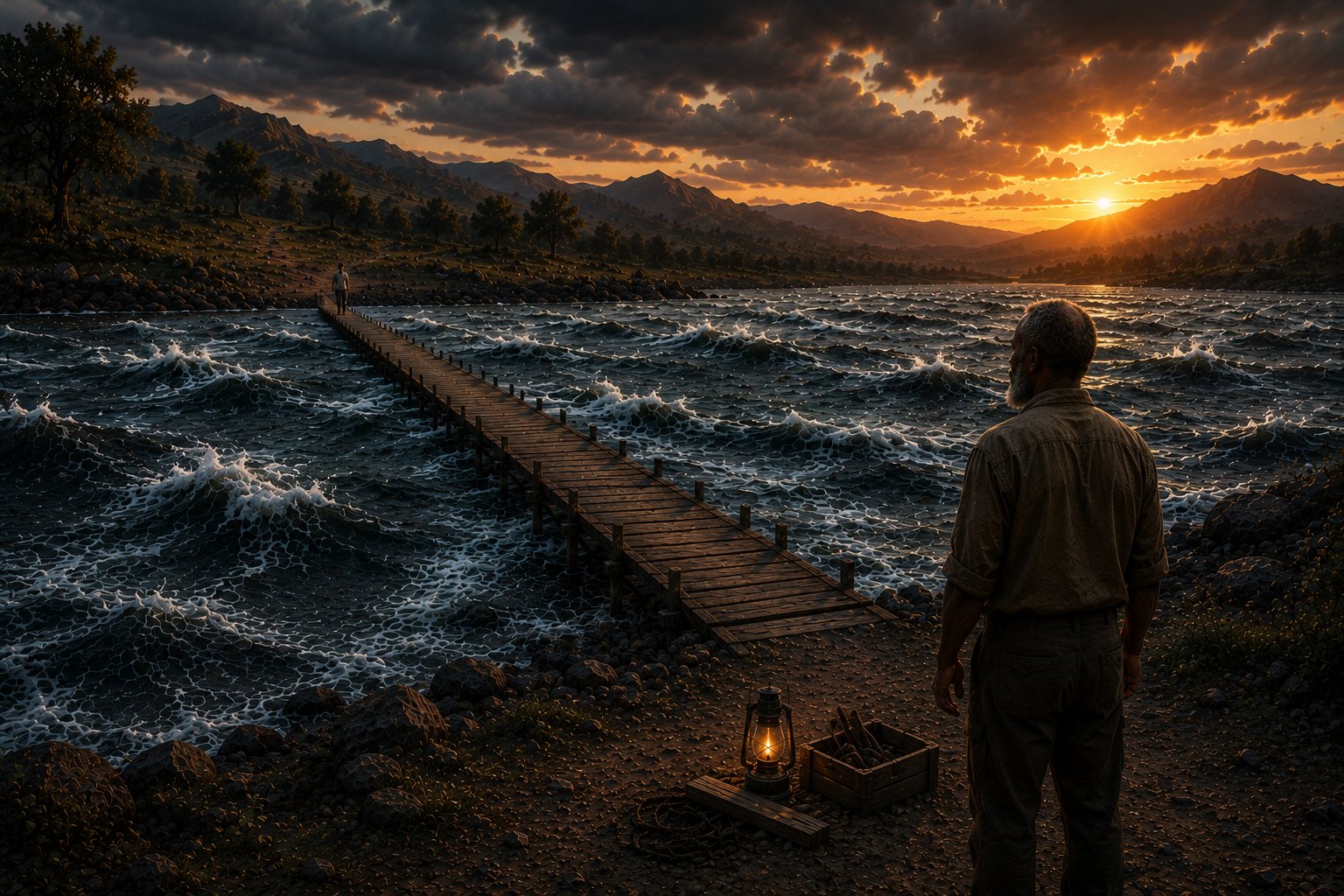
Inspired by "The Bridge Builder" by Will Allen Dromgoole
An old man reached a river
as the sun began to fade.
No bridge, no path, no helping hand,
no crossing had been made.
The tide was low that evening,
so he waded through the waters cold,
and made it to the other side,
worn out and growing old.
His journey lay behind him now,
the hardest part was past.
And yet he stopped, and turned around,
and built a bridge to last.
A traveler watched and questioned him:
"Old man, your road is done.
No one built a bridge for you,
so why should you build one?"
He said, "You're right. I crossed alone.
The water let me by.
But it won't stay low forever,
and I've lived long enough to know why.
There's a young one still behind me
who will reach this water's edge,
and find it high and rushing
where I found a quiet ledge.
I cannot walk his road for him,
nor cross it in his place.
But I can build him something
so the river shows him grace.
Not because the world was kind to me,
it wasn't, all the way,
but because I see him clearly now,
and I will not look away."
This is the work we're here for,
once we've crossed and understood:
To build, for those who follow,
the bridge where none once stood.
He had already crossed. He built it for someone he would never meet. That is the heart of everything we do. The greatest things we build are rarely for ourselves. They are for the ones coming behind us.
What we've learned, we share. The wisdom we've gained, we pass forward. And once we've made it across, we turn around and build the bridge for the next one coming.
This poem isn't an abstract idea to us. It was one my grandfather connected with deeply. He kept a copy and shared it his whole life, and his own life was the truest picture of it we have ever seen.
Ralph Ellis Thompson was a remarkable man. He stood maybe five foot six, but he was a mountain in substance, integrity, and character. In his early years as a young preacher, he roofed houses to earn a living, working long hours in the hot sun, whistling and singing off-key the whole time, with a strange and gravitational joy about him. He was the one who always picked up the people no one else would bring to church: the handicapped, the sick, the forgotten. He loved Jesus, and it showed in how he treated people. The homeless man on the street held every bit as much worth in his eyes as the mayor or the bank president.
What makes that remarkable is where he came from. Born in 1920, he lost his mother at ten, and his family never lived together again. There was no welfare, no social services to step in, so the children were scattered among relatives. Within months of moving in with an aunt and uncle, their house caught fire and he had to jump from a second-story window to escape. For years after, he was homeless, sleeping in a church and doing odd jobs for food. He wanted to wrestle in high school but couldn't afford the singlet to try out, so he never did.
He graduated anyway. At twenty he entered full-time ministry, was ordained, and gave the rest of his life to serving his generation. He has been gone many years, and we still hear stories of the selfless things he did for people.
He didn't choose his circumstances. He chose his attitude, and he chose to see the worth in everyone he met. His favorite story in all of Scripture was the prodigal son: redemption, forgiveness, and a wayward young man restored to dignity and purpose.
This poem stayed with him, the old traveler who turned back to build a bridge over a chasm he had already crossed, for the young one coming up behind. That is who my grandfather was. That is why we are here. We are the next generation's bridge.
Come help us build it, for the ones still making their way across.